
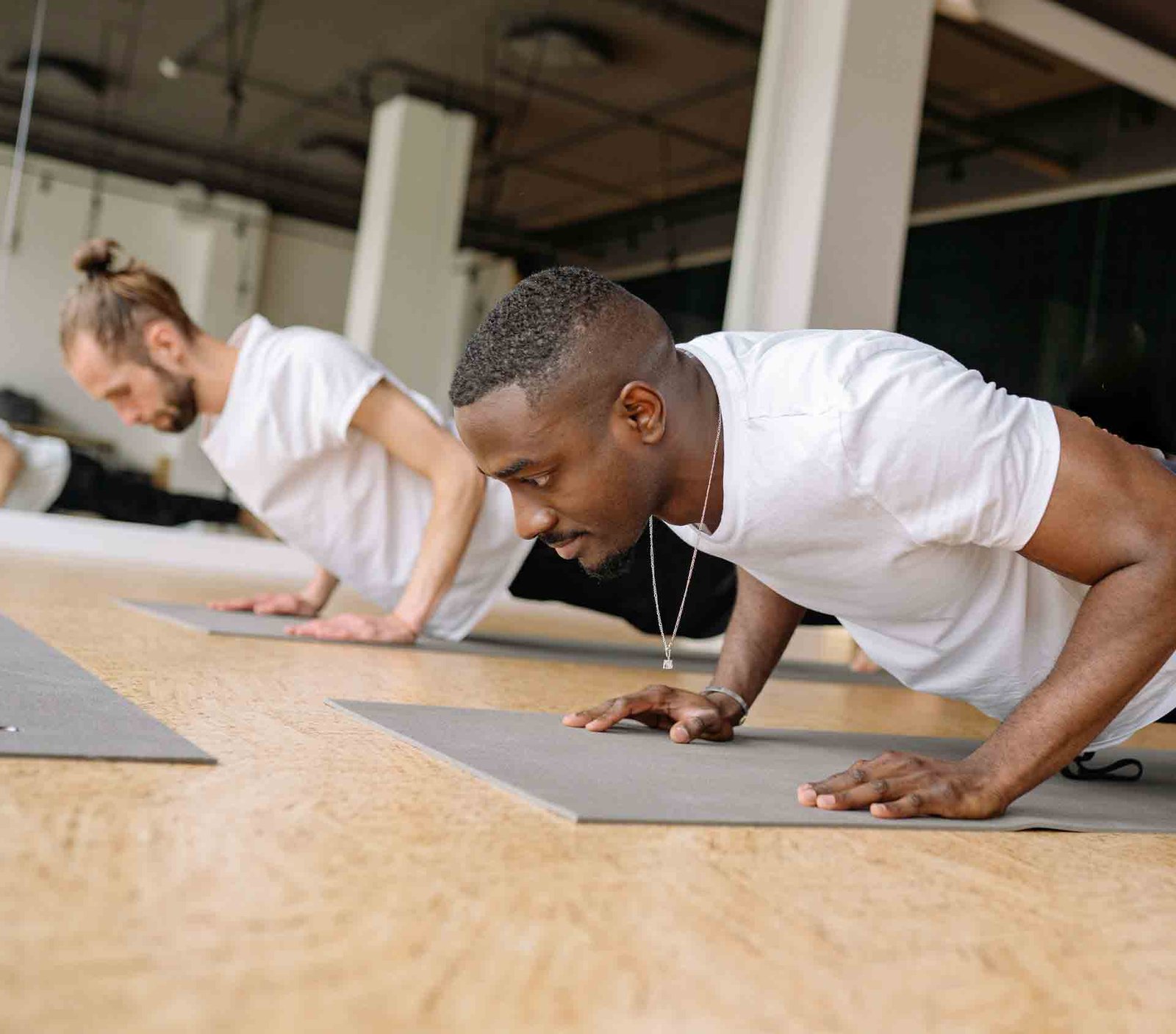

You don’t need two free hours or a fancy gym. You need a plan that fits around work, bath time, and very little sleep. Here it is.
Between work, the school run, and the never-ending list of things that need fixing, your own health is usually the first thing to slide. Most dads don’t skip workouts because they’re lazy. They skip them because the plan never fit their life in the first place.
The good news is that you need less than you think. Health guidelines for adults recommend at least 150 minutes of moderate activity a week, like brisk walking, plus muscle-strengthening activity on at least 2 days. That works out to about 30 minutes a day, five days a week, and it doesn’t have to happen all at once.
This guide gives you a simple plan built for a real dad’s week: three short strength sessions you can do at home, plus easy ways to move more with your kids.
Why your fitness matters more now than ever
Getting fit as a dad isn’t about vanity. It’s about having enough in the tank for the people who count on you.
- More energy for long days. Regular movement helps you sleep better and feel less drained, even when nights are short.
- A steadier mood. Exercise is one of the best-supported ways to take the edge off stress, so you have more patience at home.
- Strength for real life. Lifting car seats, carrying a sleeping toddler, and moving furniture all get easier, and your back will thank you.
- Your kids are watching. Children learn far more from what you do than from what you say. A dad who moves is teaching a lifelong habit.
The plan: three 30-minute sessions a week
Do this workout on three non-consecutive days, like Monday, Wednesday, and Friday. All you need is some floor space, a sturdy chair or kitchen counter, and a backpack you can load with books.
1. Warm up (5 minutes)
- March in place or walk briskly for 2 minutes
- Arm circles and hip circles for 1 minute
- 10 slow bodyweight squats
- 10 hip hinges: push your hips back with a flat back, then stand tall
2. The main circuit (20 minutes)
Do each exercise once, back to back. Rest for 60 seconds, then repeat. Aim for 3 rounds.
| Exercise | How to do it | Reps |
| Squat | Sit back like you’re reaching for a chair, then stand tall. New to it? Touch an actual chair each rep. | 10 to 15 |
| Push-up | Keep your body in a straight line. Start with your hands on a counter, then progress to the floor. | 8 to 12 |
| Backpack deadlift | Hold the bag in front, push your hips back with a flat back, then stand up and squeeze your glutes. | 10 to 12 |
| Backpack row | Hinge forward with a flat back and pull the bag toward your belly button. | 10 to 12 |
| Glute bridge | Lie on your back, feet flat, and drive your hips up until your body forms a straight line. | 12 to 15 |
| Plank | Forearms on the floor, body straight from head to heels. Breathe steadily. | 20 to 40 sec |
3. Cool down (5 minutes)
- Hip flexor stretch: 30 seconds each side, great after a day of sitting
- Doorway chest stretch: 30 seconds
- One minute of slow breathing: in for 4, hold for 4, out for 4, hold for 4
| Try this tonight Not ready for the full plan? Start with 3 rounds of 10 squats, 8 counter push-ups, and a 20-second plank. It takes about 10 minutes. Do it again on Wednesday, and you’ve already started. |
How to make it harder when it gets easy
Your body adapts quickly, which is a good thing. When the top of a rep range feels comfortable with good form, nudge it forward with one small change at a time:
- Add 1 or 2 reps per exercise each week
- Lower slowly, taking 3 seconds on the way down
- Add a few more books to the backpack
- Move your push-ups from the counter to a chair, then to the floor
- Cut your rest between rounds from 60 seconds to 45
Small, steady increases beat big jumps. Progress is a slow climb, not a sprint.
Fill the other days with movement you’ll enjoy
Your three strength sessions cover your muscle-strengthening days. Walks and active play fill in the rest of your weekly minutes.
- Walk with purpose. A brisk 20 to 30 minute walk counts, and pushing a stroller counts too.
- Play hard with your kids. Tag, kicking a ball, and bike rides are natural interval training, and they’ll never ask you to stop.
- Grab exercise snacks. Do 10 squats while the coffee brews, take the stairs, or walk during phone calls.
| Day | What to do |
| Monday | Strength session |
| Tuesday | 30-minute brisk walk |
| Wednesday | Strength session |
| Thursday | Family walk or bike ride |
| Friday | Strength session |
| Saturday | Active play outside |
| Sunday | Rest |
The three things that make or break your progress
Sleep
Muscles rebuild while you sleep, and willpower runs on it too. Adults need at least 7 hours a night. With a newborn, that might be a long-term goal, so protect what you can: nap when the chance comes, and avoid caffeine in the 6 hours before bed.
Food
You don’t need a strict diet. Aim for a source of protein at every meal, fill half your plate with vegetables or fruit, and drink water through the day. Steady fuel beats perfect fuel.
Stress
Stress makes everything harder, from sleeping to staying patient with your kids. Two minutes of slow breathing before you walk in the door after work can change the whole evening.
Common mistakes busy dads make
- Going all in, then burning out. Five intense days in week one usually means zero days by week three. Start smaller than you think.
- Skipping the warm-up. Five minutes now saves weeks of nursing a sore back later.
- Chasing weight over form. Clean reps build strength. Sloppy reps build injuries.
- Waiting for a better week. There’s no perfect time. There’s only this week.
- Training through pain. Muscle soreness is normal. Sharp or joint pain is a signal to stop and get it checked.
Quick questions
Is 30 minutes really enough?
Yes. Three strength sessions plus a few brisk walks meets the weekly guidelines for adults. Consistency matters far more than session length.
What if I miss a session?
Just do the next one. One missed workout doesn’t undo anything. Missing a month is what costs you, so get back on track as soon as you can.
Do I need to see a doctor first?
If you’re new to exercise, have a health condition, or notice chest pain, dizziness, or joint problems, check with your doctor before you start.
Train alongside other dads
Doing it alone is hard. Doing it with other dads who get it is a lot easier. Our Busy Dads Fitness program gives you short workouts built for a busy schedule, safe technique for the big movements, and a group that keeps you on track. It’s part of our mission to help men build healthy minds and strong bodies.
This article is for general education and isn’t medical advice. If you have a health condition, are new to exercise, or notice pain, dizziness, or chest discomfort, talk with your doctor before starting a new routine.
